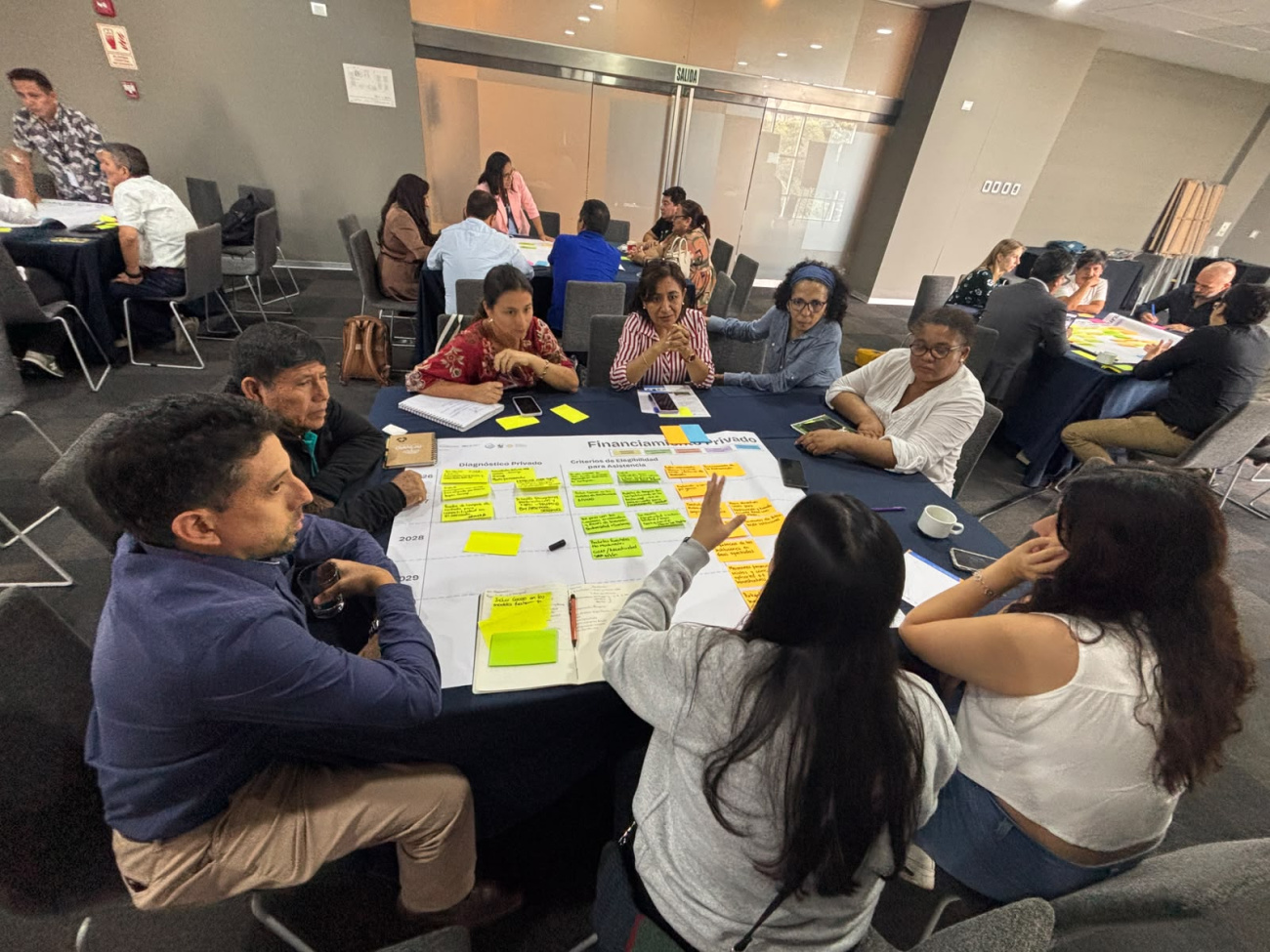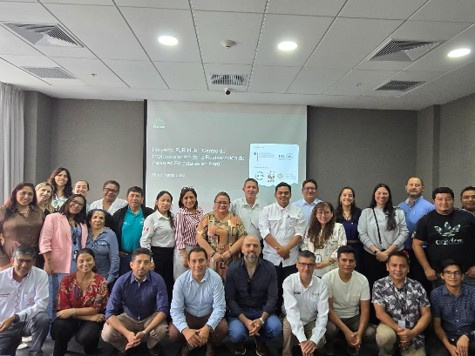
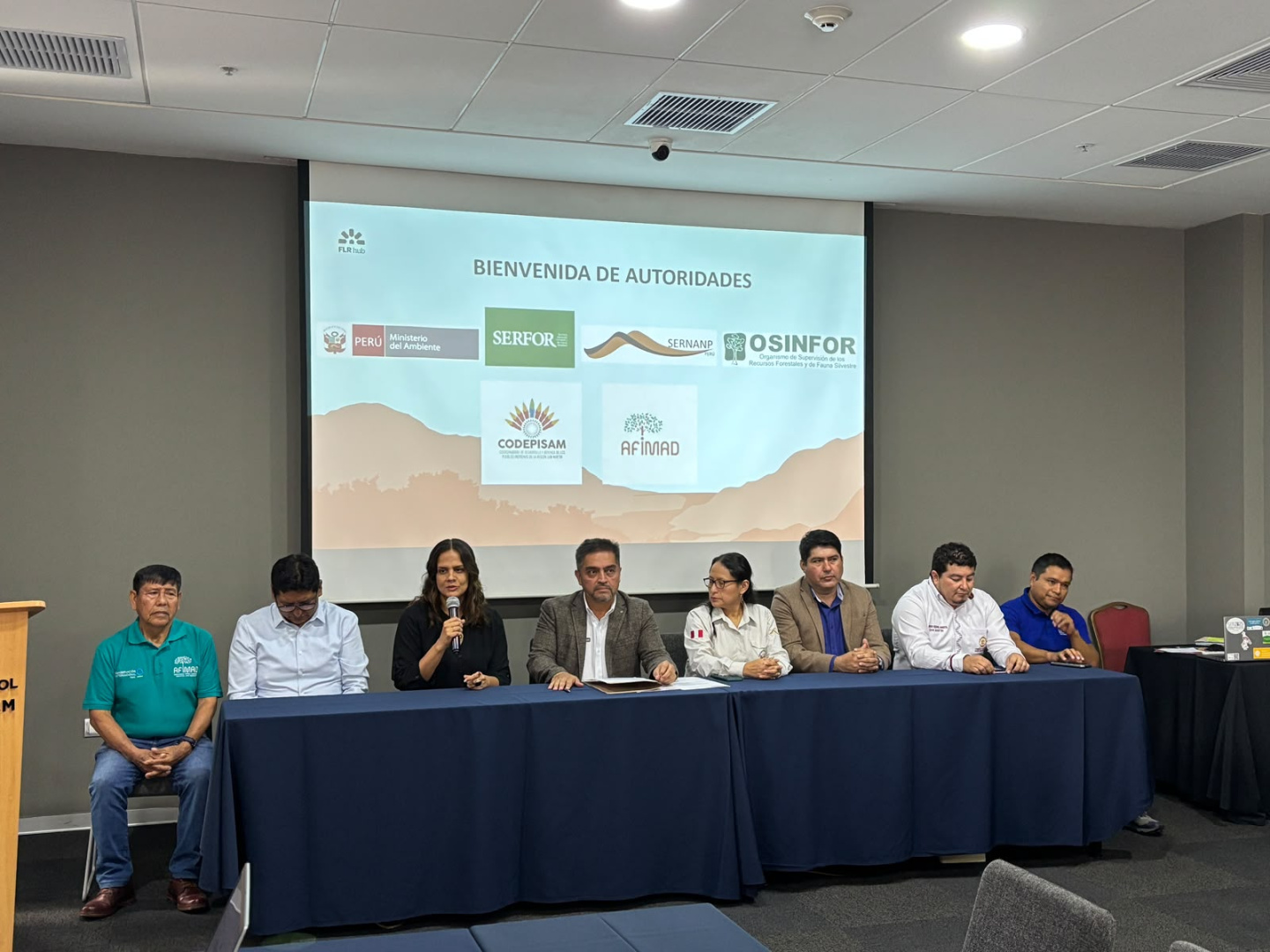
On March 26 and 27, 2026, representatives from public institutions, regional governments, indigenous organizations, academia, civil society, and cooperation agencies gathered in Lima to participate in the Kick-off Workshop for the Forest Landscape Restoration Implementation Hub (FLR Hub) Project in Peru. This project aims to strengthen the enabling conditions for forest landscape restoration, contributing to the fulfillment of the country’s national and international commitments regarding restoration, biodiversity, and climate action.
The workshop marked the official launch of the project in Peru. Designed as a space for dialogue and collective action, it brought participants together to validate Year 1 priorities and identify opportunities to strengthen the national restoration agenda toward 2030. Over the course of two days, participants shared experiences, challenges, and proposals through a methodology that combined institutional presentations, a panel on public and private investment in restoration, participatory exercises, and thematic working groups.
The opening sessions showcased progress led by institutions such as SERFOR, MINAM, SERNANP, and the regional governments of San Martín and Madre de Dios, alongside research and cooperation organizations. The presentations showed that Peru has a significant foundation of restoration policies, programs, and ongoing initiatives. However, they also highlighted that many of these efforts remain fragmented and face challenges in scaling their impact at the regional and national levels.
A central moment was the panel on restoration finance, where national and international experts agreed that restoration must cease to be viewed solely as an environmental expense and begin to be recognized as a strategic investment capable of generating long-term economic, social, and environmental benefits. The discussion highlighted the need to mobilize public and private resources through innovative mechanisms, strengthen investor confidence, and build a stronger evidence base for restoration’s benefits.
Thematic Roundtables: An Opportunity for Cross-institutional Dialogue
The most in-depth discussions unfolded across five thematic roundtables that analyzed the project’s main components: capacity building, governance, private financing, public investment, and monitoring. These sessions surfaced important conclusions regarding the opportunities and constraints currently facing restoration in Peru.
Regarding capacity building, participants noted that restoration requires far more than one-off training sessions. There is a growing need to develop lasting capacities within regional and local governments, indigenous organizations, technical staff, and territorial leaders. The discussion also highlighted the importance of integrating ancestral knowledge, strengthening applied research, and improving access to information and technical tools that enable more effective implementation. Capacity building must be understood as an enabling condition for long-term sustainability and not merely as a secondary activity.
Regarding governance, participants emphasized the need to strengthen coordination mechanisms between national institutions, regional governments, and local stakeholders. Both the National Restoration Congress and the Regional Thematic Roundtables were recognized as platforms with strong potential for coordinating efforts, exchanging experiences, and building a shared vision on restoration. However, it was also emphasized that these platforms require greater institutionalization, sustainable resources, and more active participation from local territories to fully deliver on their coordinating role.
Discussions on private financing revealed a growing interest in linking restoration with sustainable economic activities, including agroforestry systems, ecotourism, and forest value chains. However, participants identified significant barriers to attracting private investment. These include legal uncertainty regarding land tenure, the limited availability of structured projects, the lack of comparable metrics, and the need to more clearly demonstrate restoration’s profitability and benefits. The potential of mechanisms such as MERESE, carbon markets, habitat banks, and green taxonomies to mobilize new sources of financing was also highlighted.
Regarding public investment, it was acknowledged that significant progress has been made in the design and implementation of restoration projects, but it was also noted that the public investment system still has limitations in adequately addressing the complexity of ecosystems and landscapes. The discussions highlighted the need to adapt methodologies, strengthen technical capacities, and improve coordination between sectors so that restoration can be established as a fundable and scalable model.
Meanwhile, on restoration monitoring, significant progress was evident in the use of technological tools, indicators, and information platforms. However, it also became clear that the country still needs to consolidate a nationally interoperable system that contributes to global reporting, enables the integration of institutional efforts, generates comparable information, and measures results beyond biophysical variables. Participants highlighted the importance of incorporating indicators related to governance, human well-being, and territorial sustainability, as well as strengthening the technical capacities and infrastructure necessary to sustain these systems over time.
Key Priorities: The Path Forward
Across the board, a consistent finding emerged: the main challenge for restoration in Peru is not primarily the availability of financial resources. Rather, participants agreed that the greatest constraints lie in institutional coordination, multilevel governance, policy continuity, technical capacity, and tools that can transform isolated initiatives into sustainable, long-term processes.
Among the main recommendations emerging from the meeting are:
The creation or strengthening of permanent coordination mechanisms between institutions
The development of a national roadmap aligned with PROREST, the NDCs, and biodiversity targets
The strengthening of territorial capacities
The development of a portfolio of fundable projects
The consolidation of an interoperable national monitoring system.
These actions will enable existing progress to evolve into a more integrated agenda, capable of accelerating the restoration of forest landscapes and contributing to the sustainable development of territories.
With the FLR Hub Project now underway, Peru has a renewed opportunity to strengthen collaboration among institutions, mobilize investments, and generate evidence to position restoration as a key strategy for climate resilience, biodiversity conservation, and community well-being.
The initiative is funded by the German government’s International Climate Initiative (IKI) and implemented by a consortium comprising the World Resources Institute (WRI), the World Wildlife Fund (WWF), and the International Union for Conservation of Nature (IUCN), within the framework of Initiative 20x20.