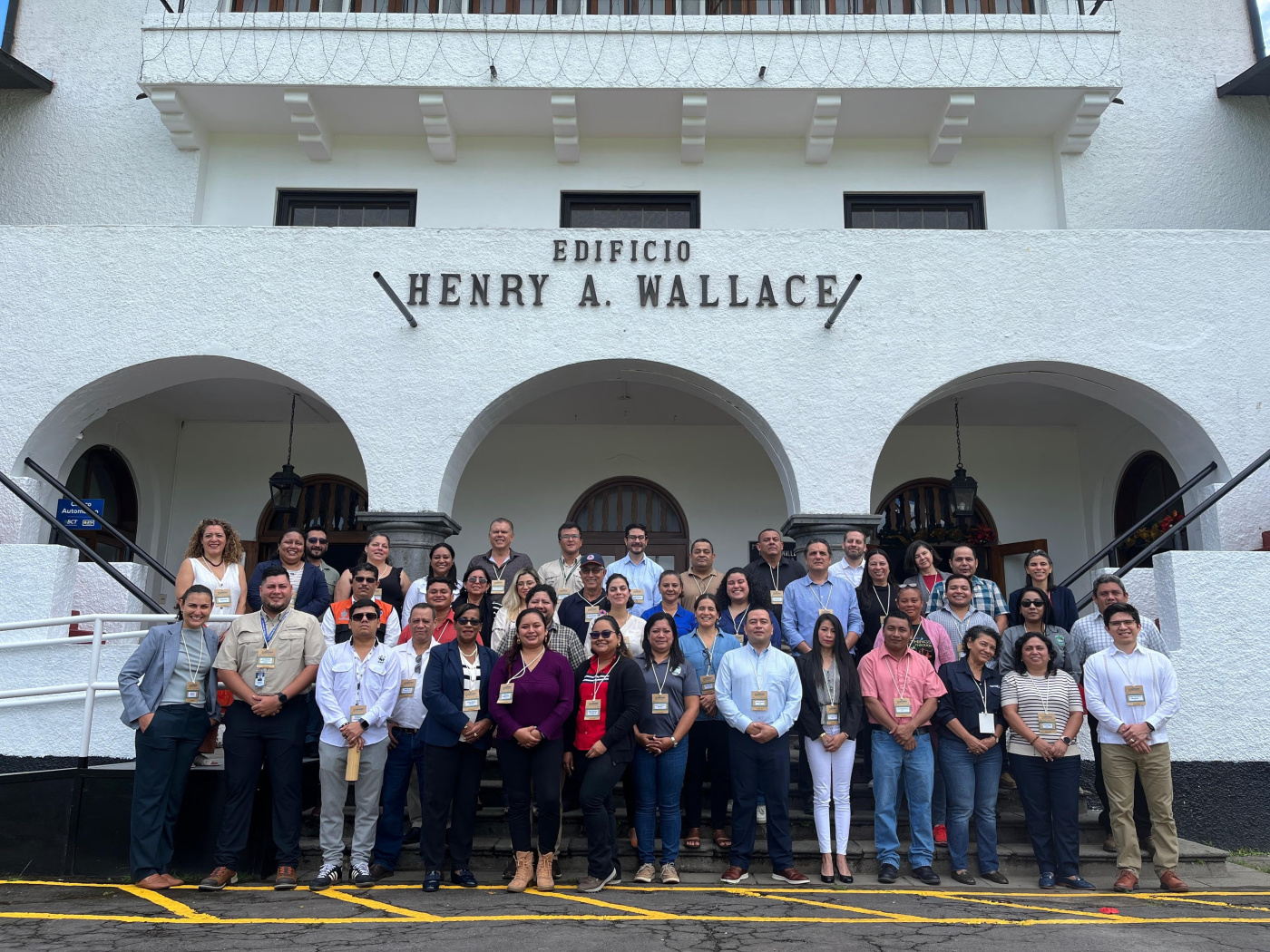
From December 1 to 4, the regional meeting of the project “Using nature-based solutions to increase resilience to extreme climate events in the Atlantic region of Central America” brought together delegations from Belize, Guatemala, and Honduras. The meeting consolidated technical and operational agreements to accelerate restoration as a natural barrier against floods, landslides, and extreme winds along Central America’s Atlantic coast. Over four days, the project team and its partners reviewed progress by landscape, prioritized interventions, and defined work priorities for the following year, underscoring a focus on the inclusion of women, youth, and Indigenous peoples.
The project “Using nature-based solutions to increase resilience to extreme climate events in the Atlantic region of Central America,” also known as REFORES (Forest Restoration for Climate Resilience), operates in the so-called hurricane corridor of Belize, Honduras, and Guatemala in the Gulf of Honduras. It restores critical ecosystems so they can function as natural barriers and thereby reduce flooding, landslides, and erosion.
The project works with local communities by integrating nature-based solutions into adaptation policy and planning, directly benefiting more than 2,000 people and indirectly more than 35,000. At the same time, it strengthens local climate response and promotes training and knowledge exchange to scale and replicate good practices.
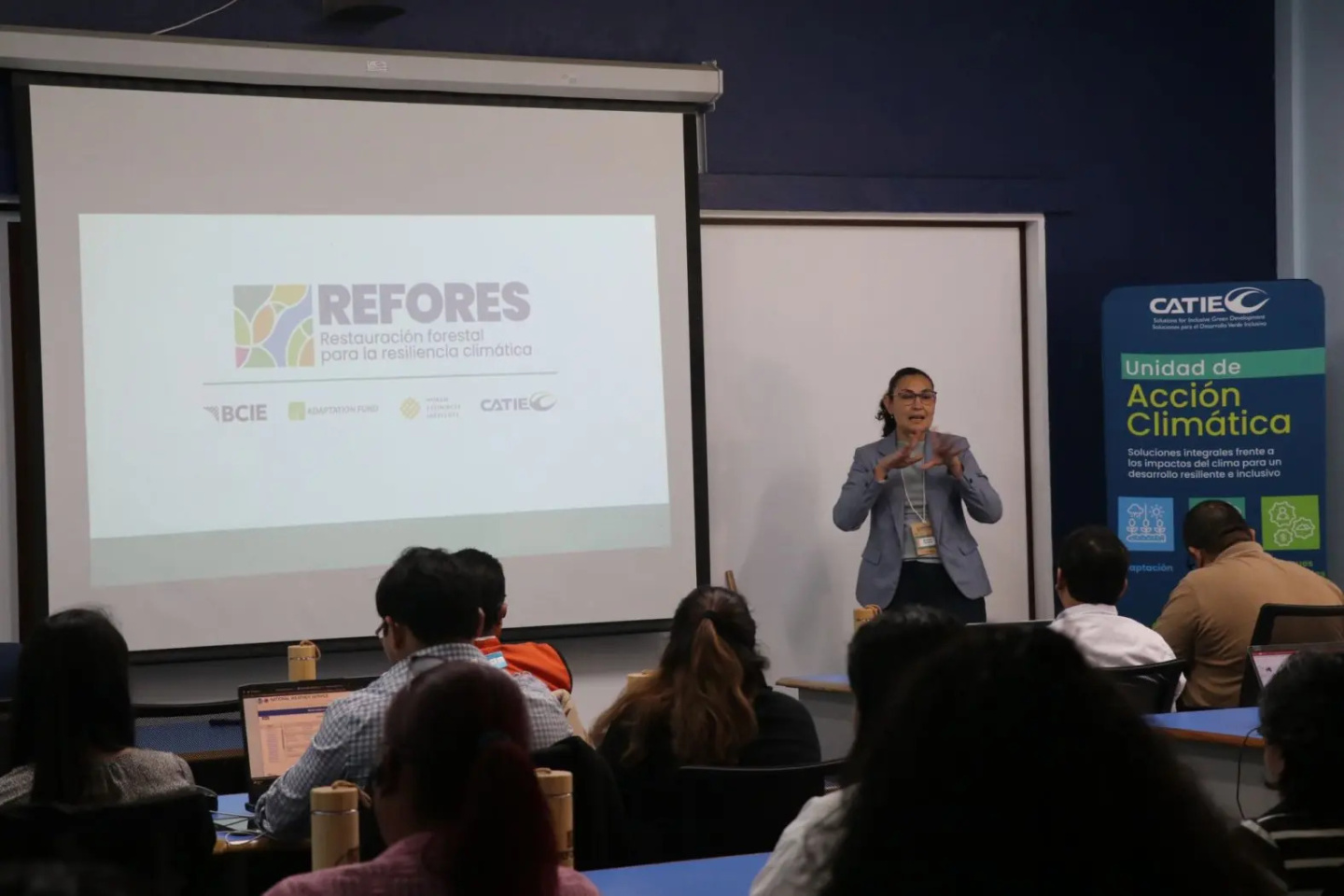
“REFORES connects with Initiative 20x20’s network to take nature-based solutions from the hurricane corridor to a regional scale. By aligning with an effort that seeks to protect and restore at least 50 million hectares by 2030, we accelerate impacts that strengthen the resilience of communities and ecosystems,” said Alejandra Laina, Director of Initiative 20x20 and of WRI Colombia’s Food, Land Use and Water program.
With the participation of technical teams from each country, alongside specialists from WRI and the Tropical Agricultural Research and Higher Education Center (CATIE), the meeting strengthened dialogue around three pillars aligned with the project’s strategy: incorporating restoration into policy and planning; strengthening adaptation in landscapes through nature-based solutions and locally managed early warning systems; and building capacities and fostering knowledge exchange.
Discussions also focused on the prioritized landscapes: in Belize, the Monkey River watershed; in Guatemala, the Cerro San Gil Reserve and Río Dulce; and in Honduras, the Merendón Mountain Range and Cusuco National Park. Participants shared experiences in riparian and coastal restoration, local networks, and guidelines to connect early warning systems with national platforms, as well as prioritization criteria and social safeguards.
Finally, the meeting enabled deeper dialogue on the resilience framework, progress on nature-based solutions, prioritization of intervention areas, and co-design of the regional capacity-building plan. In this context, next steps were agreed on communicating results, aligning with national policies, and preparing technical inputs for the REFORES portal and Initiative 20x20’s partner network.
REFORES is a project financed by the Adaptation Fund, implemented by the Central American Bank for Economic Integration (CABEI), and executed by WRI and CATIE.