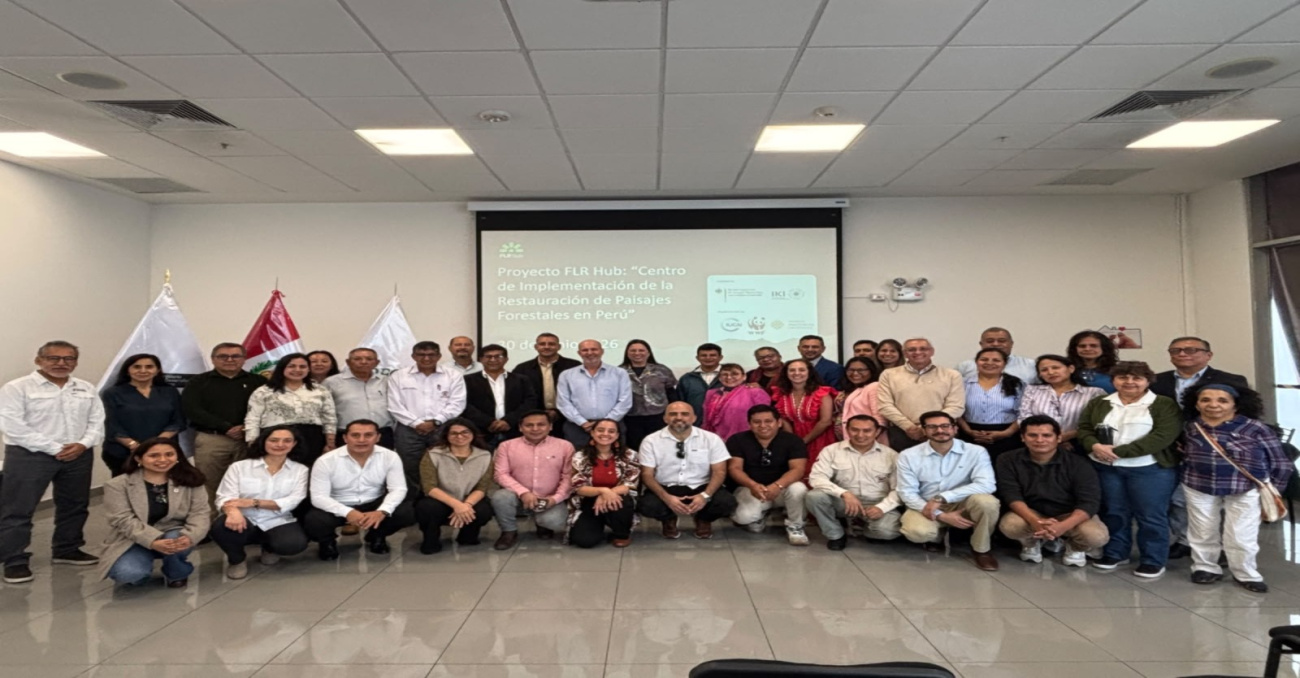
Lima, Peru, June 30, 2026. How can public incentives help mobilize investments and generate environmental, social, and economic benefits through restoration? This question brought together representatives from public institutions, international cooperation agencies, civil society, the private sector, and specialized organizations in Lima for the Technical Workshop on the Exchange of Experiences Regarding Public Incentives for the Restoration of Ecosystems and Forested Lands in Peru.
The meeting, held as part of the FLR Hub project and as a prelude to the First National Congress on Forest Ecosystem Restoration, brought together 40 representatives from 20 institutions and provided a forum for regional exchange to learn about experiences in Costa Rica, Guatemala, and El Salvador, analyze existing instruments in Peru, and identify opportunities to move toward a National Incentive Program for Restoration.
The event was organized in coordination with the National Forestry and Wildlife Service (SERFOR) and drew on Initiative 20x20’s community of practice for policymakers to connect Peru’s experience with lessons learned over several years in other Latin American countries. This exchange also aligns with the priorities established by the National Strategy for the Restoration of Ecosystems and Forested Lands (ProREST).
Learning from Regional Experience
One of the main takeaways from the meeting was learning how different Latin American countries have developed public mechanisms to mobilize resources for the conservation, restoration, and sustainable management of landscapes. While Costa Rica highlighted the robustness and maturity of its Payment for Environmental Services Program, managed by FONAFIFO, Guatemala shared its experience with programs such as PINPEP and PROBOSQUE. Both countries demonstrated the importance of establishing mechanisms capable of incorporating small-scale producers, indigenous communities, and rural users, linking the environmental objectives of restoration with job creation and the strengthening of livelihoods. For its part, El Salvador presented the rapid progress of its recent National Program of Environmental Incentives and Disincentives, which links the restoration of ecosystems and landscapes with environmental compensation mechanisms, allowing resources to be directed toward priority ecosystems, watershed restoration, biodiversity, and climate resilience.
Toward a National Roadmap: What should a restoration incentive program in peru consider?
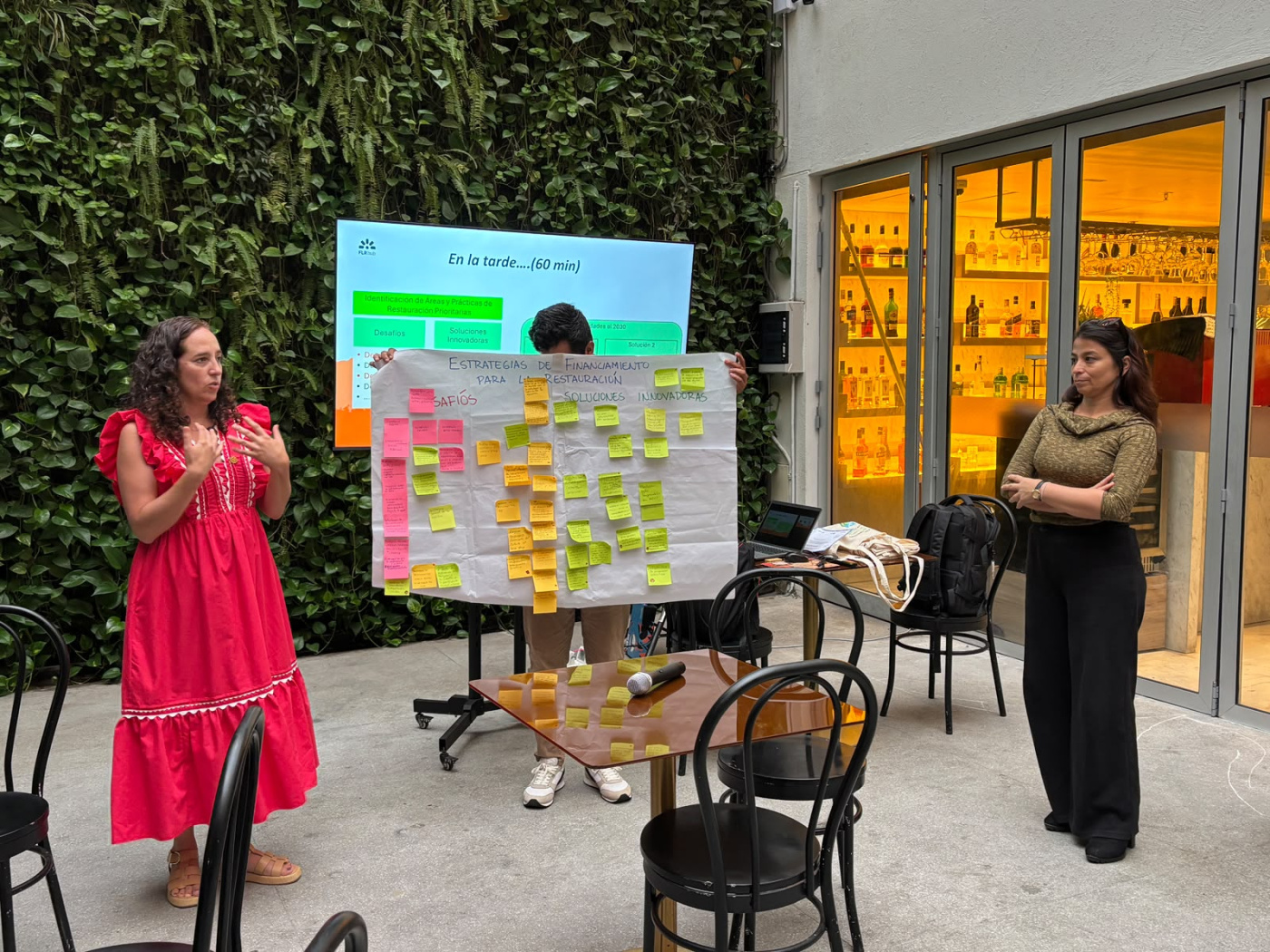
In addition to sharing experiences, the workshop provided an opportunity for participatory discussion on four key themes for designing a future program: prioritization of restoration areas and practices, financing, social impact, and monitoring and reporting. Among the elements identified are the definition of objectives and eligibility criteria for investments, the design of financial and non-financial mechanisms, the establishment of an integrated monitoring system, and the development of a governance structure capable of coordinating national and subnational institutions, communities, the private sector, academia, and international cooperation.
The workshop’s results constitute an initial set of inputs to advance the development of a Roadmap for the design and implementation of a National Restoration Incentives Program in Peru. The challenge moving forward will be to transform these lessons into a mechanism that responds to the diversity of Peruvian landscapes and that, at the same time, is sustainable, inclusive, and capable of mobilizing financing at scale.
The exchange facilitated through the 20x20 Initiative also highlights the value of regional cooperation: the experiences of various Latin American countries offer lessons that can be adapted to each national context and help accelerate the policies and investments needed to scale up restoration.
This workshop is part of the efforts of the FLR Hub project, implemented in Peru by the consortium of WRI Global, WWF Peru, and IUCN South, with the mission of strengthening the enabling conditions, capacities, and financing mechanisms needed to accelerate landscape restoration in Latin America and the Caribbean.