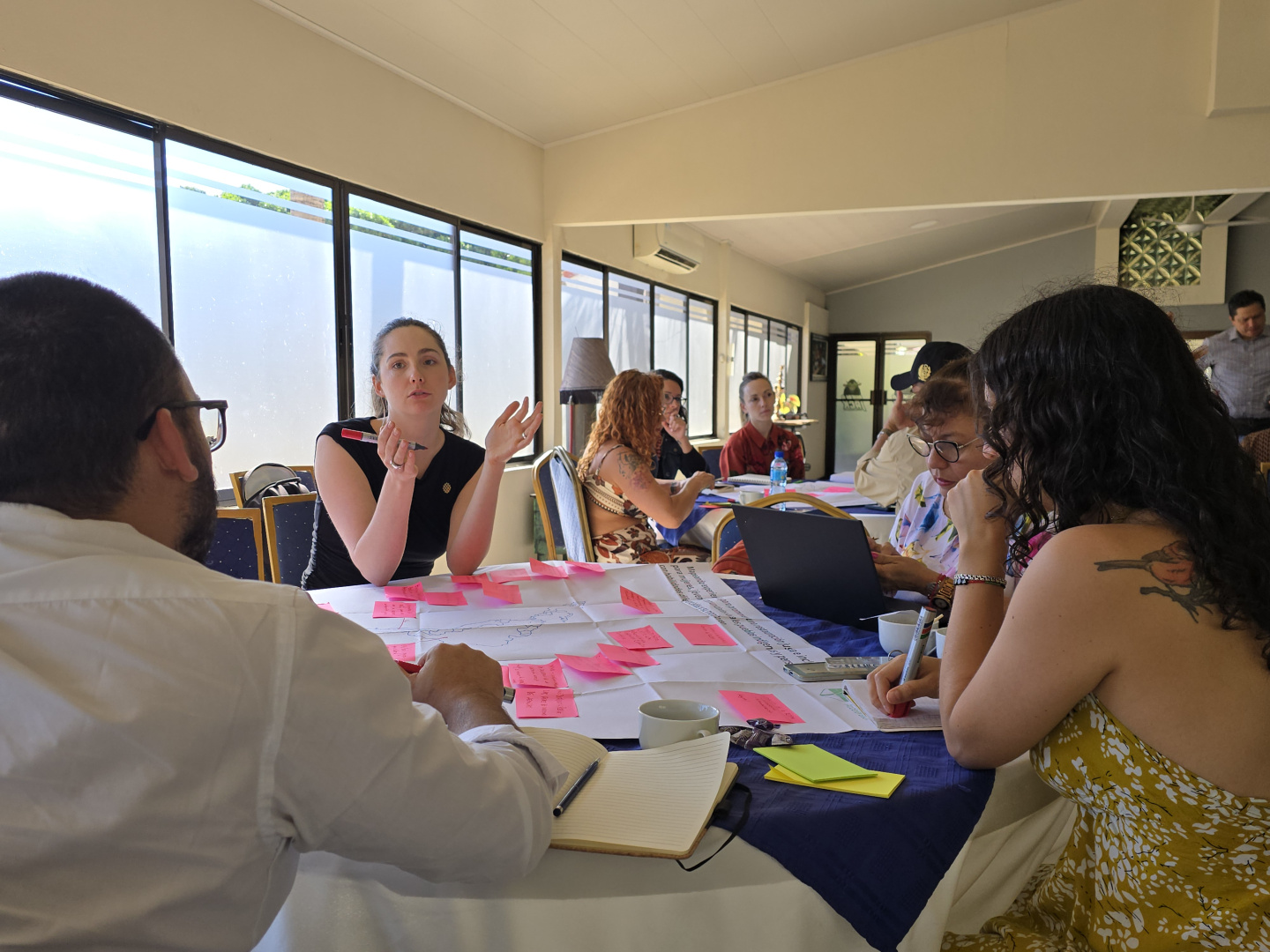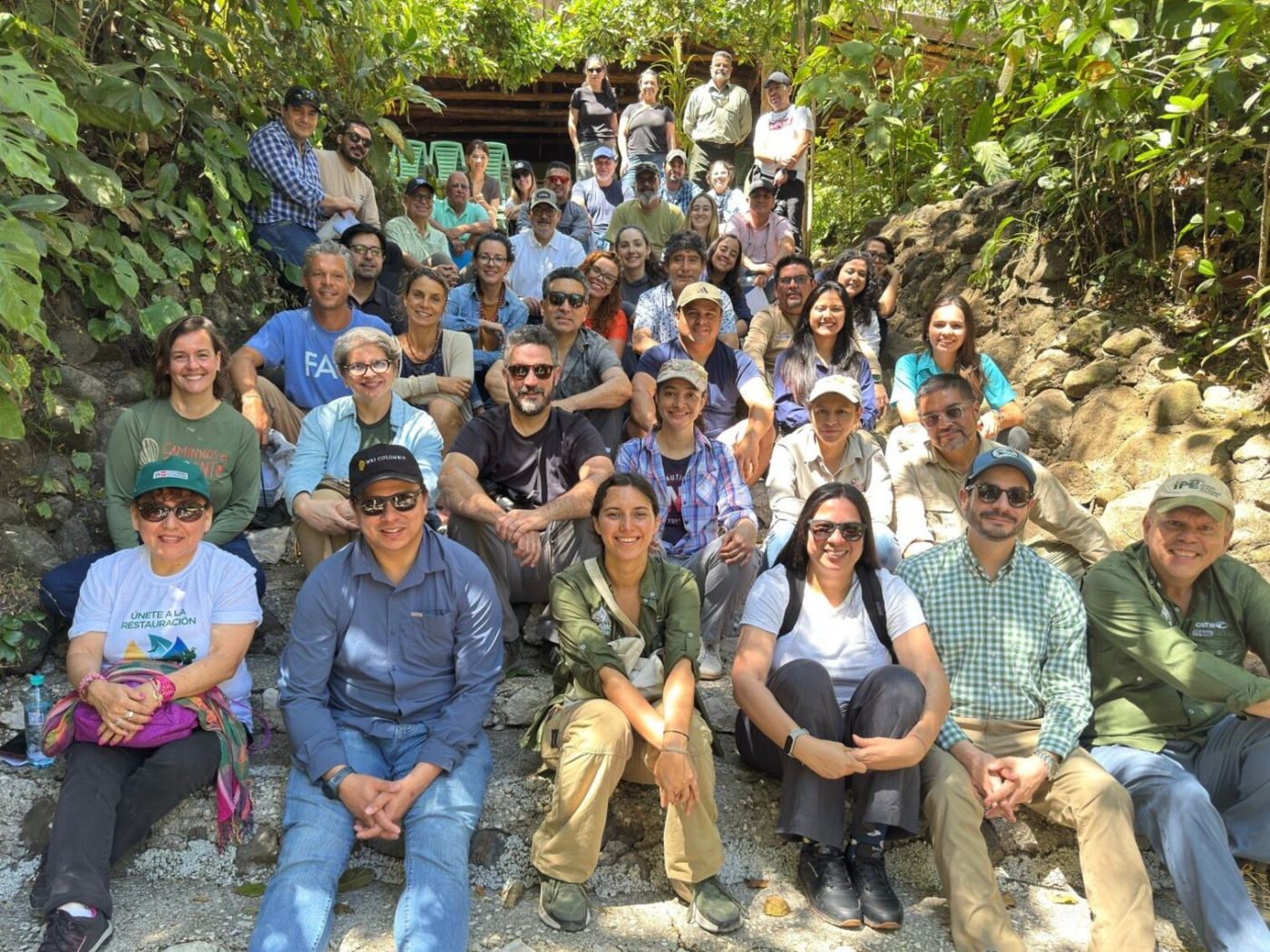
The IV edition of the Landscape Monitoring Accelerator Program in Latin America concluded with a clear message: for restoration to be effective on the ground, it must be enabled by public policy and sustained through governance and governability, with comparable methods and continuity over time.
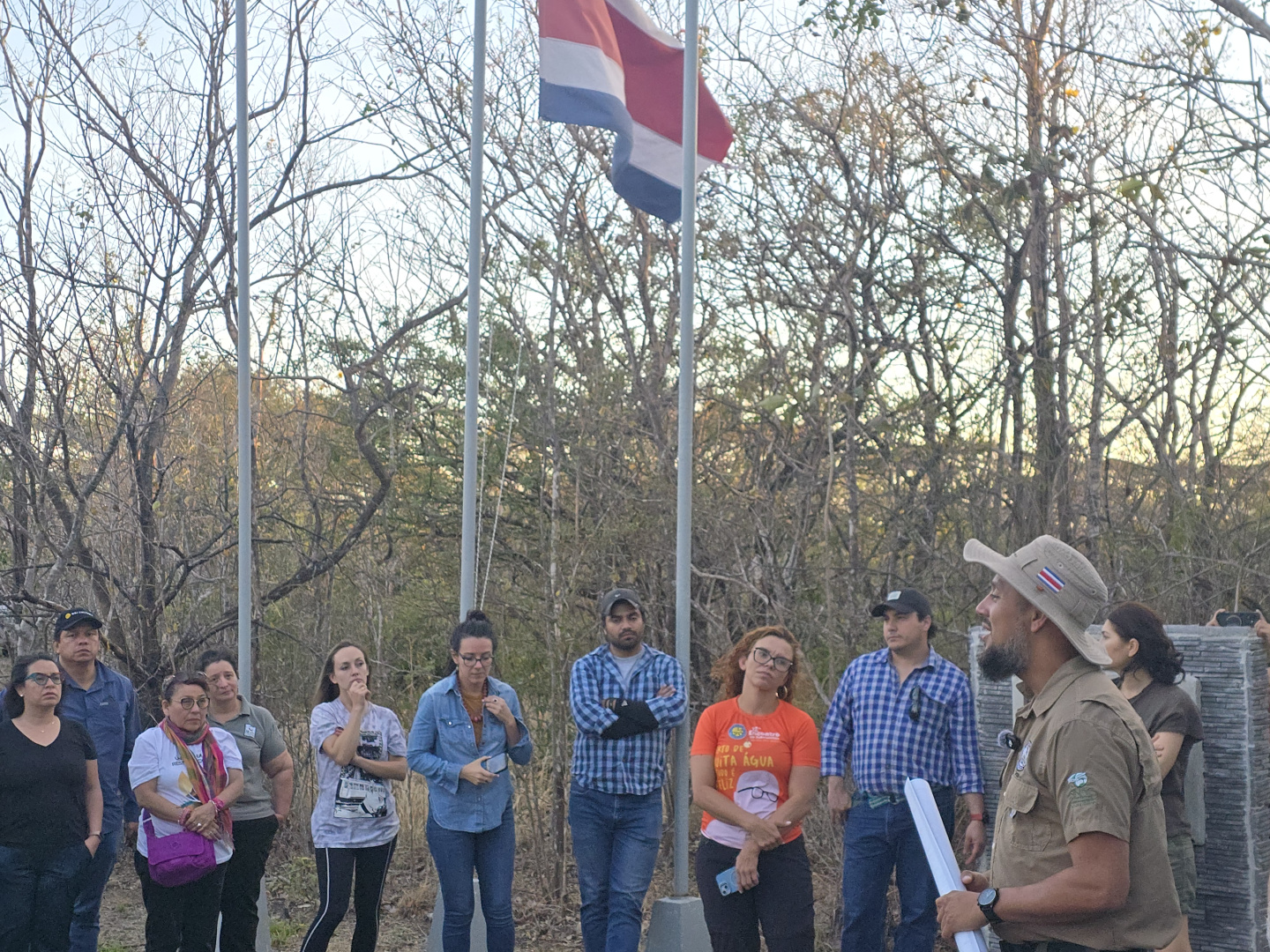
The program, organized by WRI and the Initiative 20x20 with support from the Tropical Agricultural Research and Higher Education Center (CATIE), brought together from February 2 to 7 nearly 50 representatives from Guatemala, Costa Rica, El Salvador, Mexico, Brazil, Peru, Colombia, Chile, and Paraguay. Through peer-learning sessions and field visits in the province of Guanacaste, delegations shared experiences, identified bottlenecks, and advanced practical solutions to strengthen monitoring systems that measure the performance and impacts of biodiversity-focused restoration.
The Accelerator operates as a peer-learning process: it connects teams that lead or support policies, programs, and technical monitoring systems so they can design (or refine) institutional arrangements, methodologies, and indicators that truly inform decisions and sustain results.
Restoration as a development agenda: benefits that can be seen and sustained
One cross-cutting message from the gathering was the need to strengthen a restoration narrative that goes beyond sector-specific approaches and connects with tangible benefits for society. “One of the lessons is ensuring that the narrative does not focus only on monitoring. In addition, it is important to highlight what the benefits are and how restoration is part of the development of society and our territories,” said Alejandra Laina, Director of the Initiative 20x20 and of WRI Colombia’s Food, Land Use and Water program.
In this regard, Wolke Tobón, a representative of Mexico’s National Commission for the Knowledge and Use of Biodiversity (CONABIO), underscored the need for a horizontal and cross-cutting dialogue on restoration that can permeate “the different components of sustainable development—social, environmental, and economic”—to create multifunctional landscapes that foster the well-being of society and of those who live in rural areas. “Communities are a key actor in restoration. The role they play is essential to achieving long-term sustainability,” added Javier de Paz, Head of Forest Restoration at Guatemala’s National Institute of Forests (INAB).
Policy, governance, and governability: key conditions for restoration and monitoring
Participants reiterated throughout the gathering that restoration and its monitoring are not achieved solely by refining indicators. Beyond implementing comparable methods (with quality and consistency), they highlighted the importance of three interdependent conditions:
- Policy: as an enabling condition, it is reflected when there is political will and public prioritization. With it, monitoring ceases to be a purely technical exercise and becomes an instrument to guide decisions, ensure continuity, and align institutions. Restoration also has the advantage of linking global agendas with national targets, bringing together biodiversity, climate change, and desertification or land degradation.
- Governance: refers to having clear agreements and rules on who coordinates, who validates, who uses the information, and how decisions are made across institutions.
- Governability: is the real capacity to operate the system (resources, teams, compliance, and institutional stability) so it can be sustained beyond administrative cycles. This was reflected in the experience of Costa Rica’s National System of Conservation Areas (SINAC), referenced as an example of how clear mandates and the enforcement of the law translate into operational capacity to manage protected areas and coordinate contributions from civil society.
Alongside these conditions, participants emphasized the importance of quality, consistency, and continuity to ensure comparable methods, reliable data, and long-term tracking to detect verifiable changes and learn what works, while also identifying persistent barriers related to gender and equity.
“What is innovative about the Accelerator lies in the exchange of experiences with experts who live the day-to-day realities of restoration and policy,” said Alejandra Laina, stressing that this coordinated work is essential for Latin America to move toward a common narrative—and the possibility of thinking about and acting on restoration jointly.